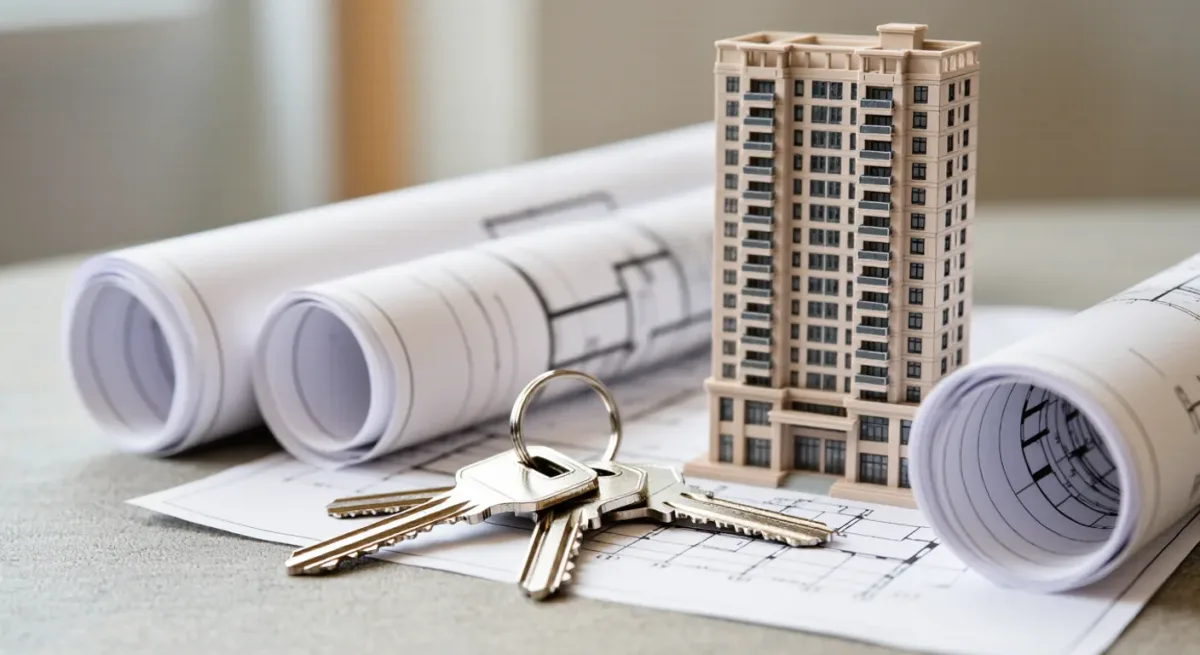
AED 2 million is the property value needed for a ten-year UAE golden visa through real estate. The threshold was set under the 2022 amendments to the golden visa framework, replacing the higher investment levels of the programme's 2019 launch, and the visa is renewable in ten-year increments without a sponsor.
Property is one of several routes into the scheme, alongside investors, entrepreneurs, specialised talents and outstanding professionals. Real estate remains the most used route by individual applicants, and it is administered through the UAE property sector's registries rather than through a separate investment authority.
What the AED 2 million must look like
The federal identity authority, now the Federal Authority for Identity, Citizenship, Customs and Port Security (ICP), processes applications under rules published in cabinet resolutions. The property can be a single unit or several properties whose combined value reaches AED 2 million, provided all are in Dubai or another emirate and are registered in the applicant's name. The value is assessed from the land department valuation, not the listing price.
Both completed and off-plan properties can qualify. For off-plan units, the developer and project must be approved, and the applicant must demonstrate the committed value even though the title deed comes later. Dubai's land authorities and the ICP publish approved-project lists for this purpose.
Mortgaged property and the old AED 5 million rule
Mortgaged property can qualify, with a condition: the bank or mortgage provider must be a UAE-licensed lender, and in practice applicants show either a no-objection certificate from the bank or proof of the down payment committed. The older 2019 regime required AED 5 million and a retention period; the 2022 amendments removed the retention requirement and cut the threshold.
The separate five-year investor visa still exists for business investment tracks, but the ten-year property route is the one most buyers target. Visa holders can sponsor a spouse and children, and there is no requirement to reside in the UAE full-time to keep the visa alive, according to the published rules.
Step by step through the application
The process runs through two channels, depending on the emirate:
- In Dubai, buyers apply through the Dubai Land Department's golden visa service in parallel with the ICP, using a title deed or off-plan Oqood registration as the base document.
- Elsewhere, applications run directly through ICP channels or the relevant emirate's land department.
- Required documents: passport, Emirates ID if held, the title deed or Oqood certificate, a valuation where requested, and bank letters for mortgaged property.
- Fees are per applicant and per family member; issuances are ten years, renewable.
Why buyers aim at exactly AED 2 million
The threshold has changed what gets built. Developers market studios and one-bedroom units priced just above AED 2 million as golden visa products, and payment plans are structured so that the committed contract value crosses the line even before handover. Analysts tracking Dubai launches report a persistent cluster of launches in the AED 2.0 to 2.5 million band for this reason.
For a fuller picture of buying unbuilt units, including the escrow protections that apply, see our guide to buying off-plan property in Dubai. The interaction matters: an off-plan purchase can serve both a yield strategy and the visa route, but the visa assessment will lean on the developer's approval status.
Family sponsorship, in practice
The property golden visa extends to the holder's family in a way employment visas do not. A spouse and children can be sponsored under the main applicant's approval without separate qualifying investments of their own, sons up to the age cap regardless of study status under the published rules for golden visa families, and daughters sponsored until marriage under the general family framework. Support for domestic staff follows the standard domestic-worker visa tracks, sponsored by the resident rather than by the property.
Processing runs on two clocks. The property verification, confirming the valuation, the mortgage status and the escrow or title documentation, takes the longer time, while the identity steps, medical testing, Emirates ID issuance and visa stamping, are routine. Applicants already resident in the UAE on employment visas can transition without leaving the country; applicants abroad process through UAE consular channels once the property qualification is confirmed. Renewal after ten years re-verifies that the property remains registered and unencumbered in a disqualifying way, so owners who later sell or heavily mortgage must plan the renewal around a qualifying asset.
Common failure points, and how to avoid them
Applications fail in predictable places. Valuation shortfalls top the list: a purchase at AED 2.1 million that the land department values at 1.95 million does not qualify, and buyers near the threshold should check the department's valuation before assuming the contract price carries. Mortgage documentation is second: banks issue no-objection certificates on their own timelines, and an application filed without the bank's letter stalls. Off-plan approvals are third: a project missing from the approved list fails regardless of price. Each of these is checkable before any fee is paid, and the order of operations, verify first, file second, is the difference between a routine application and an appeal.
A quieter planning point concerns couples and partners. Property held in one name routes the visa through that person alone; joint ownership requires attention to how the land registry records the shares, since qualifying values are assessed per the registration. Families planning around school admissions or employment transitions should also sequence the visa's ten-year clock against those dates, because the visa's independence from employment is precisely the flexibility worth timing well.
What the visa does not do
A golden visa is residency, not citizenship, and it does not remove property obligations: service charges, mortgage instalments and land department fees continue regardless of visa status. It also does not by itself create a tax residence anywhere, a point UAE authorities have repeated as the country's tax framework has grown.
What it does deliver is duration. Ten years of renewable residency, anchored to a single registered asset, is a long horizon for a market where expatriate tenure was historically tied to employment contracts. That durability, more than any yield arithmetic, is what the AED 2 million purchase buys.