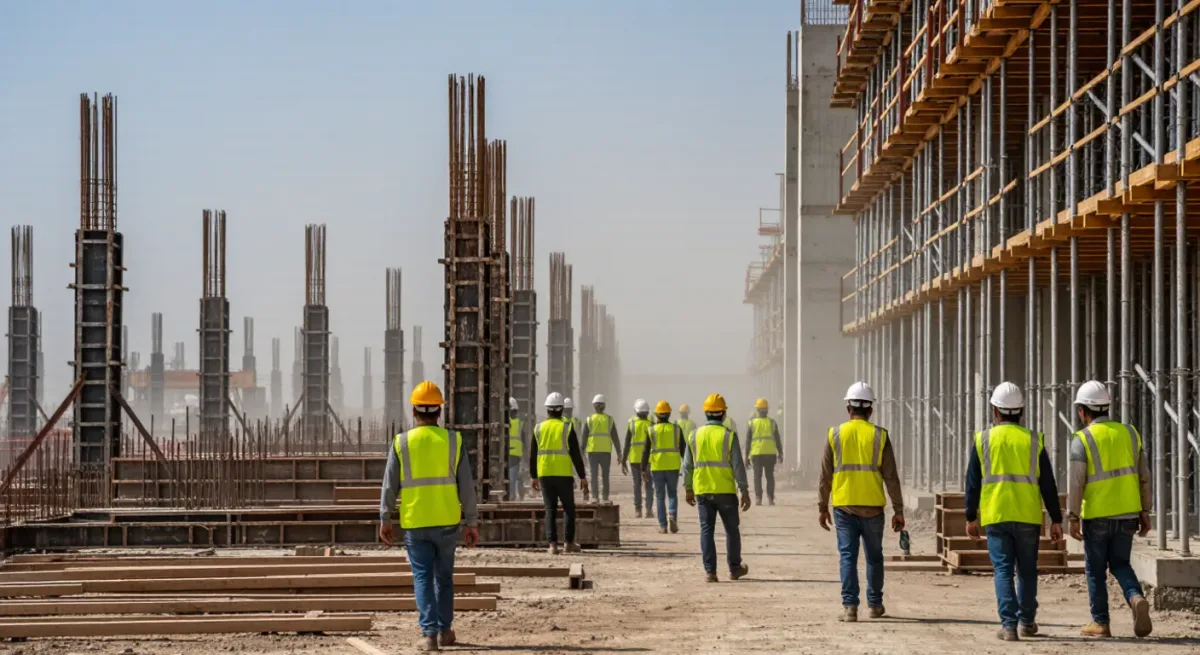
Between 2020 and 2022, the Gulf's three largest labour markets rewrote core rules of the sponsorship system: Qatar abolished exit permits and the no-objection certificate requirement for changing jobs in 2020 and set a non-discriminatory minimum wage; Saudi Arabia's 2021 Labour Reform Initiative gave most private-sector expatriates freedom to change employers; and the UAE's 2022 labour law converted all contracts to fixed terms and scrapped its own NOC practice. Together they mark the widest reform of Gulf labour systems since the kafala framework took shape half a century ago.
The pressure behind the changes was external as much as internal: Qatar's reforms were negotiated under international scrutiny before and after the 2022 World Cup, with the International Labour Organization opening a project office in Doha in 2018 that remains engaged with implementation. The UAE and Saudi changes tracked economic strategy, mobility suits talent-hungry economies better than captive workforces.
What each state changed
| State | Reform | Effect |
|---|---|---|
| Qatar (2020-21) | Laws 18 and 19 of 2020: NOC abolished, exit permits ended for most workers, minimum wage QR 1,000 plus food and housing allowances | Job mobility and a wage floor |
| Saudi Arabia (2021) | Labour Reform Initiative: job mobility for most private-sector expatriates under revised transfer rules | Employer changes without employer consent |
| UAE (2022) | Federal Decree-Law 33 of 2021: fixed-term contracts, NOC abolished, new contract types including part-time | Contract flexibility and mobility |
What the reforms delivered
Measurably: worker movement. Job-switching in Qatar rose after the NOC's abolition, wage dispute filings through Qatar's wage protection system and committees rose as enforcement machinery caught up with the new rights, and the minimum wage lifted the floor for the lowest-paid segment. In the UAE, the fixed-term regime regularised the relationship between contract and residency, and mid-contract mobility became administrative rather than adversarial. Saudi Arabia's reform, paired with the Nitaqat Saudization system's quotas and the Qiwa digital employment platform, moved expatriate mobility toward market pricing.
What did not change
The honest ledger is shorter on the second column. Residency remains tied to employers in most cases, so mobility is bounded by visa mechanics even where consent is no longer needed. Domestic workers, a large workforce across the Gulf, sit under separate rules with weaker protections in several states. Wage protection systems exist everywhere but enforcement is uneven, and the ILO's reporting on Qatar has documented the gap between statute and practice in sectors like construction and security. Migrant-sending countries' own assessments mix recognition of the reforms with documentation of abuses that persist.
For employers, the practical upshot is competitive: retention now runs on pay and conditions rather than paperwork, and HR practice across the Gulf has professionalised accordingly.
The Emiratis and Saudis of it: nationalisation's role
Reform ran alongside nationalisation. Saudi Arabia's Nitaqat, operating since 2011, sets Saudization ratios by sector, and the Qiwa-Mudad ecosystem digitised compliance; the UAE's Emiratisation programme sets Emirati hiring targets in defined private-sector roles. The two tracks coexist: mobility for expatriates above them, quotas for nationals within them, and the labour market's structure set by the intersection.
For the environment multinationals weigh when siting regional headquarters, labour flexibility now ranks as a Gulf advantage, a factor in the relocation decisions tracked in our explainer on Saudi Arabia's regional headquarters rule.
How the reforms changed Gulf labour markets, measurably
The evidence base, though contested at the edges, has consistent findings. Job mobility rose after the consent requirements fell, Qatar's post-2020 transfer data and the UAE's contract-conversion files both show it, and wage floors lifted the lowest-paid segment where enforcement reached. The ILO's Qatar reporting documents the machinery, wage protection systems now cover the bulk of the private workforce, dispute committees process claims in weeks rather than the years the old system consumed, and inspections multiplied. What the reforms did not do is change the fundamental architecture: sponsorship endures in residency law, wages remain set by passport hierarchy in practice, and enforcement gaps concentrate in the sectors where workers have least voice. The honest summary, shared by the ILO's own publications, is direction confirmed, destination unreached.
| Reform | Moved | Unmoved |
|---|---|---|
| Mobility | Consent no longer required | Visa mechanics still bind |
| Wages | Floors and payment systems | Passport-tiered pay persists |
| Enforcement | Committees and inspections scaled | Coverage thins in informal sectors |
| Domestic workers | Some coverage extended | Separate, weaker rules remain |
For employers, the strategic reading is that labour is now a market in the Gulf in the sense economists use: workers can leave, so retention is priced. The firms that adapted early, paying for skills and building careers rather than holding papers, report the region's familiar advantage intact, cheaper operations than Western peers, with one older lever, enforced immobility, gone from the toolkit. That is the reform's real signature: not the end of the kafala era's inequalities, but the beginning of their market correction.
Where reform goes next
The next decade's files are already visible in the region's policy drafts: portable benefits, so a worker's accruals travel between employers and borders; skills-linked visas, which the UAE has begun piloting; and the formalisation of domestic work under the general labour codes, the sector every reform round has postponed.
Watch three files: domestic-worker coverage, where treaty bodies and sending states keep pressure on; portable benefits and gratuity reform, already partly addressed in the UAE's new labour regime; and enforcement funding, the unglamorous variable that determines whether the paper rights hold on construction sites. The direction across all six states is one-way, because the economic model that relied on captive labour has been replaced by one that competes for it.