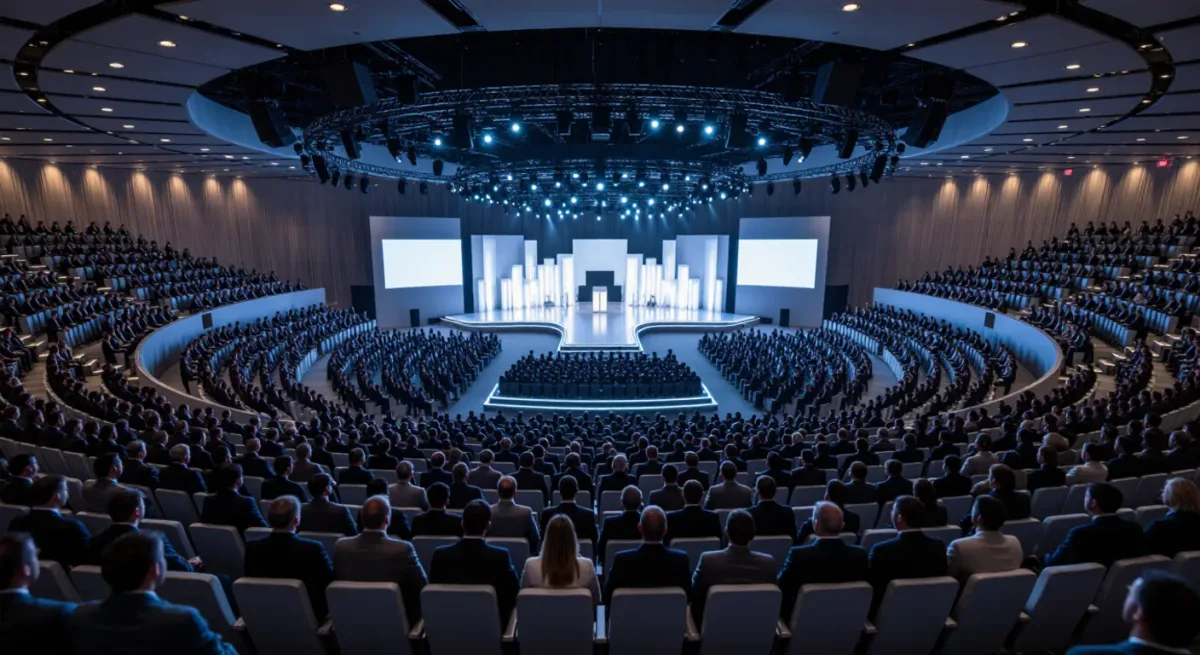
The World Governments Summit 2026 closed in Dubai on February 5 after three days of sessions at Madinat Jumeirah under the theme 'Shaping Future Governments'. The summit, which opened Tuesday, February 3, was billed by its organisers as the largest international edition yet, and its programme tracks ran from governance and trade to heavy emphasis on artificial intelligence and digital transformation.
Four awards were announced by the summit's managing director and UAE minister Mohammad Al Gergawi: best minister, most reformed government, a sustainability honour and a best teacher award, continuing the recognition programme the annual event has run since its relaunch from the Government Summit brand. The summit again drew heads of state, ministers and Gulf business delegations, with affiliated sessions run by organisations including the OECD's International Transport Forum and UN agencies.
What the summit is
The Dubai-hosted gathering, held annually since 2013 under the World Governments Summit Foundation, functions as the public sector's counterpart to Davos: a venue where governments showcase reforms and where bilateral meetings cluster on the margins. For the UAE, it is a pillar of the country's convening-power strategy, alongside January's Abu Dhabi Sustainability Week, and it reliably produces bilateral agreements, MoUs and technology pilots timed to the programme.
| Detail | 2026 edition |
|---|---|
| Dates | February 3-5, 2026 |
| Venue | Madinat Jumeirah, Dubai |
| Theme | Shaping Future Governments |
| Awards | Best minister, most reformed government, sustainability, best teacher |
| Tracks | Governance, trade and economy, AI and digital transformation |
The AI thread
Artificial intelligence dominated the programme's future-of-government tracks, consistent with both hosts' priorities: the UAE was first to appoint a dedicated AI minister in 2017, and Gulf states now compete to automate public services. Sessions addressed AI in public administration, digital identity and service delivery, themes that carry commercial weight for the region's technology vendors, whose government contracts are set in exactly these corridors. The UAE's stated ambition to automate government services end-to-end has made the summit a de facto marketplace for public-sector technology.
Why the margins matter more than the stage
Veteran attendees plan around the bilateral rooms, not the plenaries. The summit concentrates several dozen heads of delegation in one place within a week of Abu Dhabi Sustainability Week, compressing months of diplomacy into days. Trade ministers meet on the margins as the UAE expands its CEPA network, covered in our explainer on the UAE's trade agreement programme, and investment agencies schedule launch events around the calendar.
The event also serves as the UAE's annual statement of governance brand: efficient hosting, content control and the message that the region's institutions are partners rather than subjects of global reform debates. The 2026 edition's scale, in its largest-ever format, was itself the message.
What the 2026 edition signalled about AI governance
The programme's AI weight is a marker in itself. Government-after-government now arrives with an automation agenda, and the summit has become the venue where public-sector AI is demoed, negotiated and compared. For Gulf states the interest is direct: their bureaucracies are small relative to ambition, so digitisation substitutes for headcount, and their procurement can move faster than Western peers'. The 2026 sessions on digital identity, service automation and AI-assisted regulation previewed procurement cycles that will run through the year, and the technology vendors who staffed the exhibition floors came to sell into exactly those cycles. The summit's AI track is, in short, a marketplace wearing a conference badge, and the Gulf hosts it because the Gulf intends to own the counter.
The summit's UAE story, in one section
For the host, the summit is the clearest expression of a national strategy that treats convening as an industry. Dubai's event economy, exhibitions, forums and summits, fills its calendar, hotels and flights with a regularity tourism alone cannot, and the World Governments Summit is the flagship: heads of state attend because their peers do, exhibitors come because the delegations do, and the whole assembly returns each February with the reliability of an airline schedule. The emirate's investment in the format, venue, media production and the year-round secretariat, is repaid in the currency its economy runs on, relevance, and the 2026 edition's record scale will be cited in the next cycle's invitations as proof the format grows.
The content legacy is thinner than the institutional one, as it is for most summits: ministerial keynotes fade, but the bilateral documents signed on the margins, the AI-in-government pilots exchanged between delegations and the standing working groups the event spawns, accumulate into the slow machinery of policy transfer. The summit's honest scoreboard is that machinery, not the stagecraft, and the reason it endures is that the machinery works.
A closing assessment
Fourteenth edition, largest ever, AI front and centre, and a February calendar slot that the world's governments now plan around: the 2026 summit closed the way the event has learned to, with scale as the message and the margins as the substance. Next year's dates will be announced in the usual way, and the region's convention machine will roll on to them.
What to track after the closing session
- MoUs and bilateral agreements announced in the summit's aftermath, typically published by participating governments over the following weeks.
- Follow-through on AI-in-government commitments, where Gulf states have moved fastest globally.
- The awards' most-reformed-government cohort, a usable shortlist of countries restructuring their public sectors.
- Next year's dates, announced at the close, which anchor the region's convening calendar for 2027.
For a summit once criticised as a talking shop, the observable fact is persistence: fourteenth convening, largest edition, and a calendar position that governments and companies now build their February around.