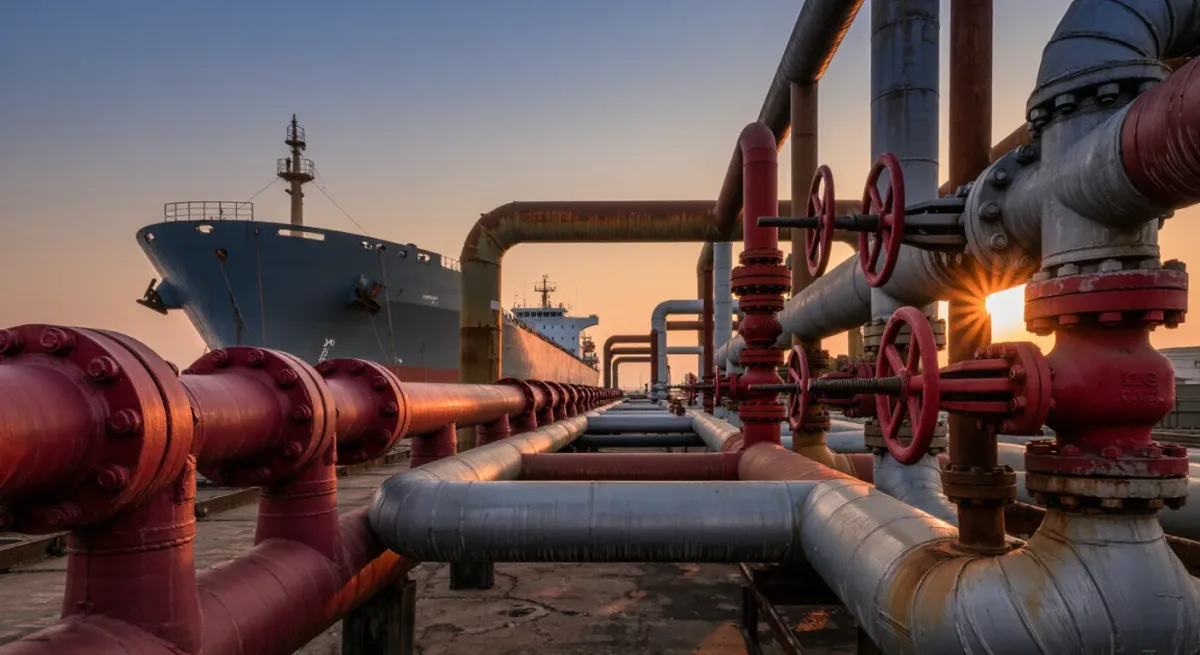
OPEC+ agreed on August 2, 2026 to raise production by 188,000 barrels per day for September, the final tranche in the phased restoration of the 1.65-million-barrel-per-day cut the group first agreed in 2023, World Oil and Reuters reported. The decision completes a two-and-a-half-year cycle of monthly quota increases with which Saudi Arabia, Russia and five allies unwound their voluntary cuts, and the group signalled a pause in further increases thereafter.
The August decision was telegraphed: Reuters reported on the same day that OPEC+ had agreed in principle on the September increase and a pause beyond it, citing a source familiar with the talks. The mechanism approved in late 2025, assessing members' maximum production capacity as the basis for a new quota regime from 2027, now becomes the central preoccupation of the oil market's OPEC+ watchers, as covered in our follow-up on the September 6 pause decision.
The arc of the rollback
| Phase | What happened |
|---|---|
| 2023 | Voluntary cuts of 1.65 million bpd agreed by eight members |
| 2024-26 | Monthly phased restorations, accelerating then steadying |
| August 2, 2026 | Final 188,000 bpd increase approved for September |
| After September | Pause signalled; capacity-based quotas from 2027 on the agenda |
Why the pace mattered
The restoration strategy served two purposes in Riyadh's calculus: reclaiming market share from producers outside the alliance, US shale above all, and disciplining quota discipline inside it, where over-production by some members repeatedly complicated the arithmetic. The cost was price. Benchmark crude traded below the levels Gulf budgets assume across stretches of the cycle, and the softer revenue line showed up in the 2025 Aramco dividend guidance cut and in Saudi spending restraint through 2026.
For consumers, the rollback added supply into a market the 2026 regional conflict had disrupted on the gas side, muting, though not eliminating, the price effects of the year's attacks on energy infrastructure, the Qatari LNG damage among them, examined in our analysis of Qatar's Ras Laffan rebuild.
The pause logic
Pausing at the completion point is the group's neutral option: it neither tightens a market that is finding balance nor floods it while demand growth remains uncertain. Officials framed the monthly-meeting cadence, which continues, as keeping live options open, and the capacity-assessment mechanism approved in November 2025 gives the December 2026 meetings a technical basis for the 2027 quota architecture, a negotiation that historically produces friction over whose capacity estimates count.
What to watch
- The September 6, 2026 meeting, which confirmed the pause for October.
- Compliance data: whether members with quotas actually produce to them.
- The capacity-assessment exercise feeding 2027 quotas, the group's next structural fight.
- Demand signals from Asia, the destination for the bulk of the restored barrels.
The shale test the strategy ran
The restoration's strategic target was always American shale, and the interaction ran both ways. Higher OPEC+ supply pressured prices toward shale's breakeven band, slowing US rig activity and consolidation-hedged expansions through the cycle's softest months; resilient US production, in turn, capped every price rally the group's restraint might otherwise have harvested. The score through the restoration's completion is a draw with structure: US output growth continued but decelerated, OPEC+ reclaimed volume and cohesion, and the market settled into a range both sides can live with, which in producer politics is what winning quietly looks like. The 2027 capacity exercise will test whether the truce holds inside the alliance now that the shared enemy of idle barrels has been fully mobilised.
The members' calculus, country by country
The eight-member core that executed the rollback ran the policy with visibly different tolerances. Saudi Arabia, holding the largest idle capacity, managed the pace, accepting lower prices to defend market share and group discipline, a strategy consistent with its decade of supply management. Russia, financing a war economy, needed volume and revenue alike and pushed the restoration's cadence hard, according to delegates' accounts in energy media. The UAE, whose quota dispute with Riyadh was settled by the capacity-review mechanism earlier in the decade, produced to its upgraded allocation throughout. Kuwait, Iraq, Algeria, Kazakhstan and Oman filled the arithmetic with their own compliance records, Iraq's the patchiest, Kazakhstan's renegotiated after pipeline outages. The group's durability through the cycle is partly this: every member banked something, which is what eight-party agreements require.
| Member | Rollback position |
|---|---|
| Saudi Arabia | Paced the restoration, largest idle cushion |
| Russia | Volume-forward under fiscal pressure |
| UAE | Produced to upgraded allocation |
| Kuwait, Algeria, Oman | Steady compliance |
| Iraq, Kazakhstan | Episodic over-production, regularised |
The demand side the group watched
Through the restoration, the demand ledger kept shifting under the arithmetic. Chinese imports, the marginal barrel's destination, ran strong through 2025-26 even as its economy's headline growth cooled, supported by strategic stockpiling and petrochemical feedstock demand. Indian consumption grew on schedule with its refining expansion. OECD demand was the drag, efficiency and substitution eroding transport fuels year by year. The group's monthly cadence was designed precisely for this kind of ledger, allowing the restoration to slow whenever the demand line wobbled, which it did, repeatedly, and which explains the pace's unevenness better than any conspiracy theory about targets the group never stated.
The summary
With the September 2026 increase, OPEC+ returns the barrels it withheld since 2023 and closes the chapter with its cohesion intact and its preferred tool, monthly management, still in hand. The market that received those barrels is more volatile than the one they left, which is why the pause, unremarkable on paper, is the soundest decision the group has made all year.